

Scientific Evidence for Spinal Decompression in Back Pain Treatment
Many scientific studies have shown that Spinal Decompression is an effective method for treating back pain. A selection of these studies can be seen below.



Retrospective Chart Review of Nonsurgical Spinal Decompression as a Therapeutic Modality for Low Back Pain
Low back pain (LBP) is a leading cause of disability and health care costs worldwide. Despite its prevalence, many patients fail to respond to surgical interventions and often face opioid dependency. Nonsurgical spinal decompression (NSSD) is a conservative treatment that may alleviate LBP by decompressing intervertebral discs, but it remains underutilized as a result of limited evidence and lack of insurance coverage.
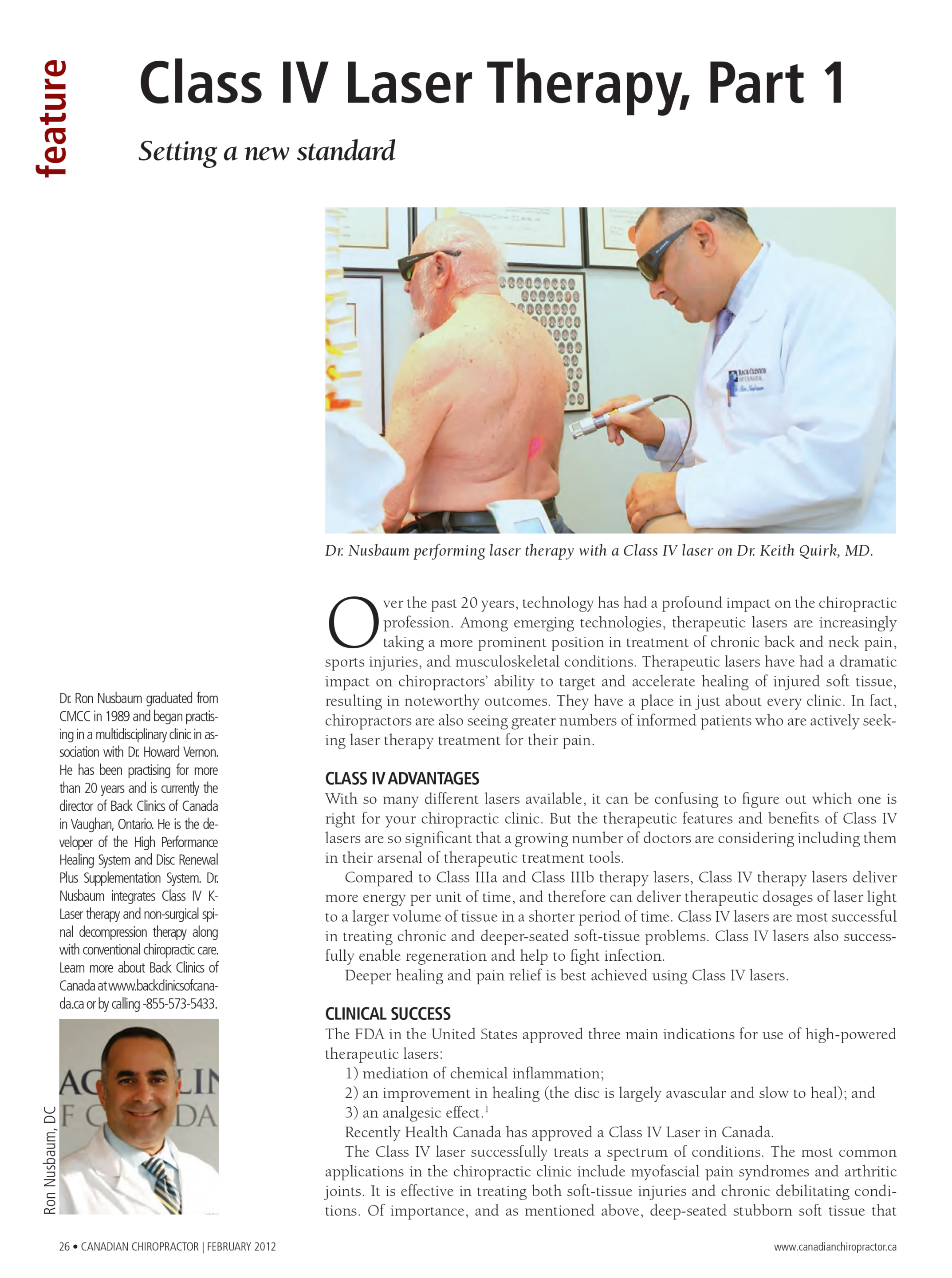
Class IV Laser Therapy, Part 1
Over the past 20 years, technology has had a profound impact on the chiropractic profession. Among emerging technologies, therapeutic lasers are increasingly taking a more prominent position in treatment of chronic back and neck pain, sports injuries, and musculoskeletal conditions. Therapeutic lasers have had a dramatic impact on chiropractors’ ability to target and accelerate healing of injured soft tissue, resulting in noteworthy outcomes.
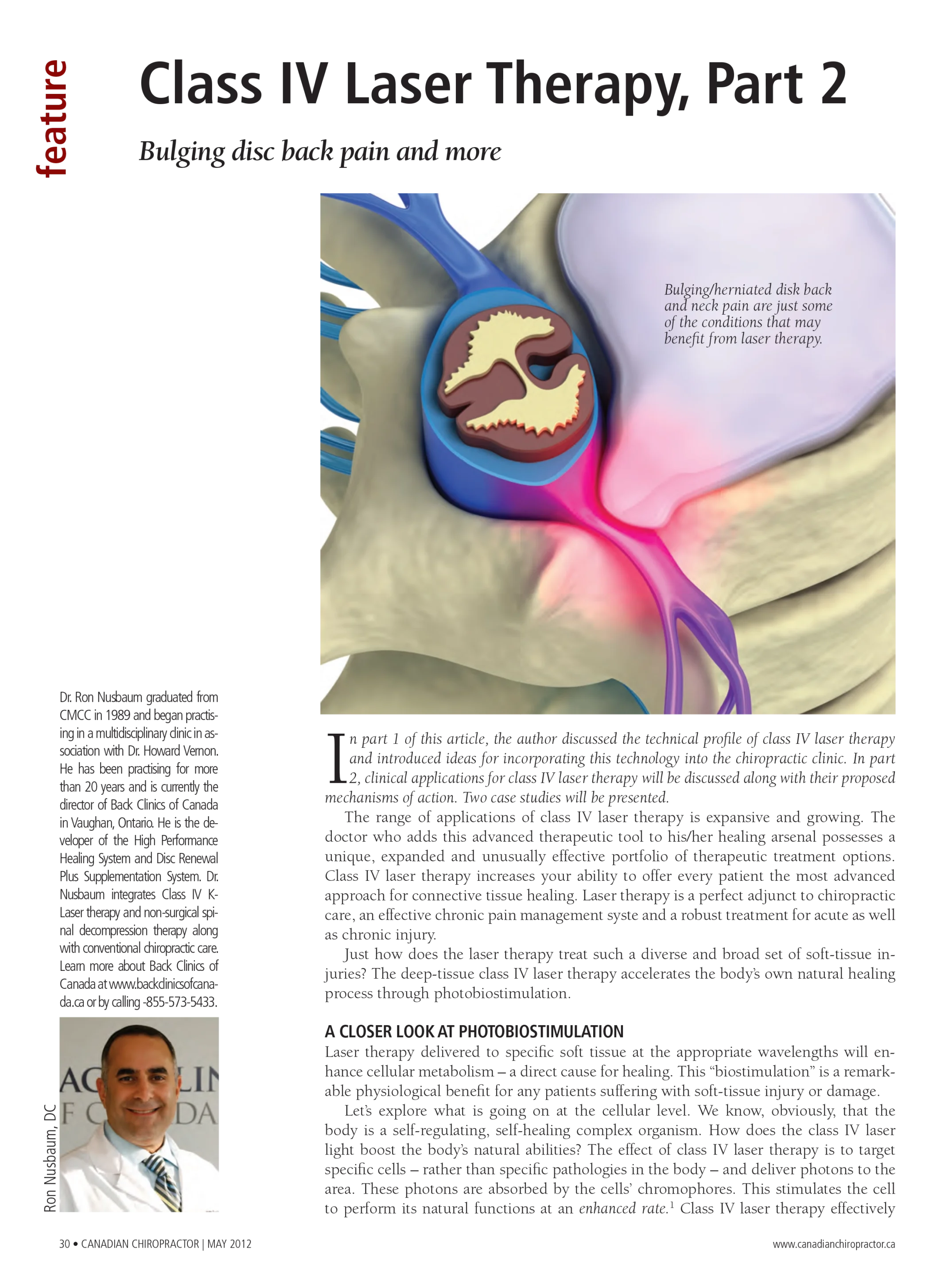
Class IV Laser Therapy, Part 2
In part 1 of this article, the author discussed the technical profile of class IV laser therapy and introduced ideas for incorporating this technology into the chiropractic clinic. In part
2, clinical applications for class IV laser therapy will be discussed along with their proposed
mechanisms of action. Two case studies will be presented.
The range of applications of class IV laser therapy
Treatment of Low Back Pain by Spinal Decompression and Spinal Exercises
A U.S.-based concept of decompression of the spine is introduced to treat back pain as an effective, non-surgical, non-invasive method. Since the disc is a vascular structure, it doesn’t receive fresh blood and oxygen with every beat of the heart. It requires ‘diffusion’ created by motion and ‘decompression’ to restore nutrients and enhance healing.
Spinal Decompression, Part 1
Our profession has a wonderful track record for helping Canadians reach a higher level of health, and maintain it naturally. But there is a certain group of patients who do not respond to traditional chiropractic care as well as we’d like them to. Often, these challenging back and neck pain patients are suffering from bulging or herniated discs or advanced degenerating discs. Spinal decompression therapy is one option that has demonstrated a degree of success in many of these cases. By its very nature, it is a procedure that complements our approach, as it is non-invasive, non-surgical, and requires no drugs or medications.
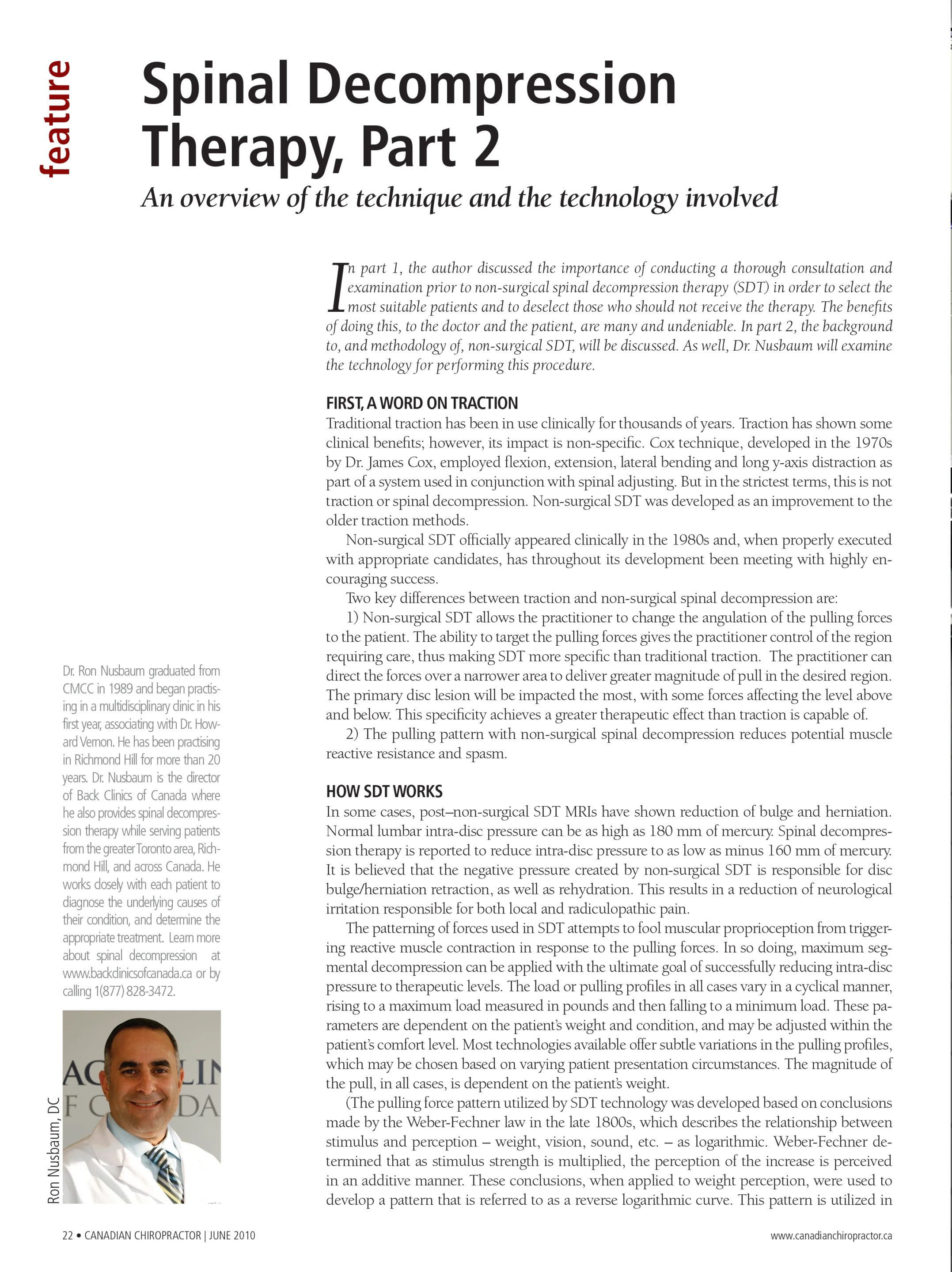
Spinal Decompression Therapy, Part 2
In part 1, Dr. Nusbaum discussed the importance of conducting a thorough consultation and examination prior to non-surgical spinal decompression therapy in order to select the most suitable patients and to deselect those who should not receive the therapy. The benefits of doing this, to the doctor and the patient, are many and undeniable. In part 2, the background to and methodology of non-surgical Spinal Decompression Therapy will be discussed. As well, Dr. Nusbaum will examine the technology for performing this procedure.
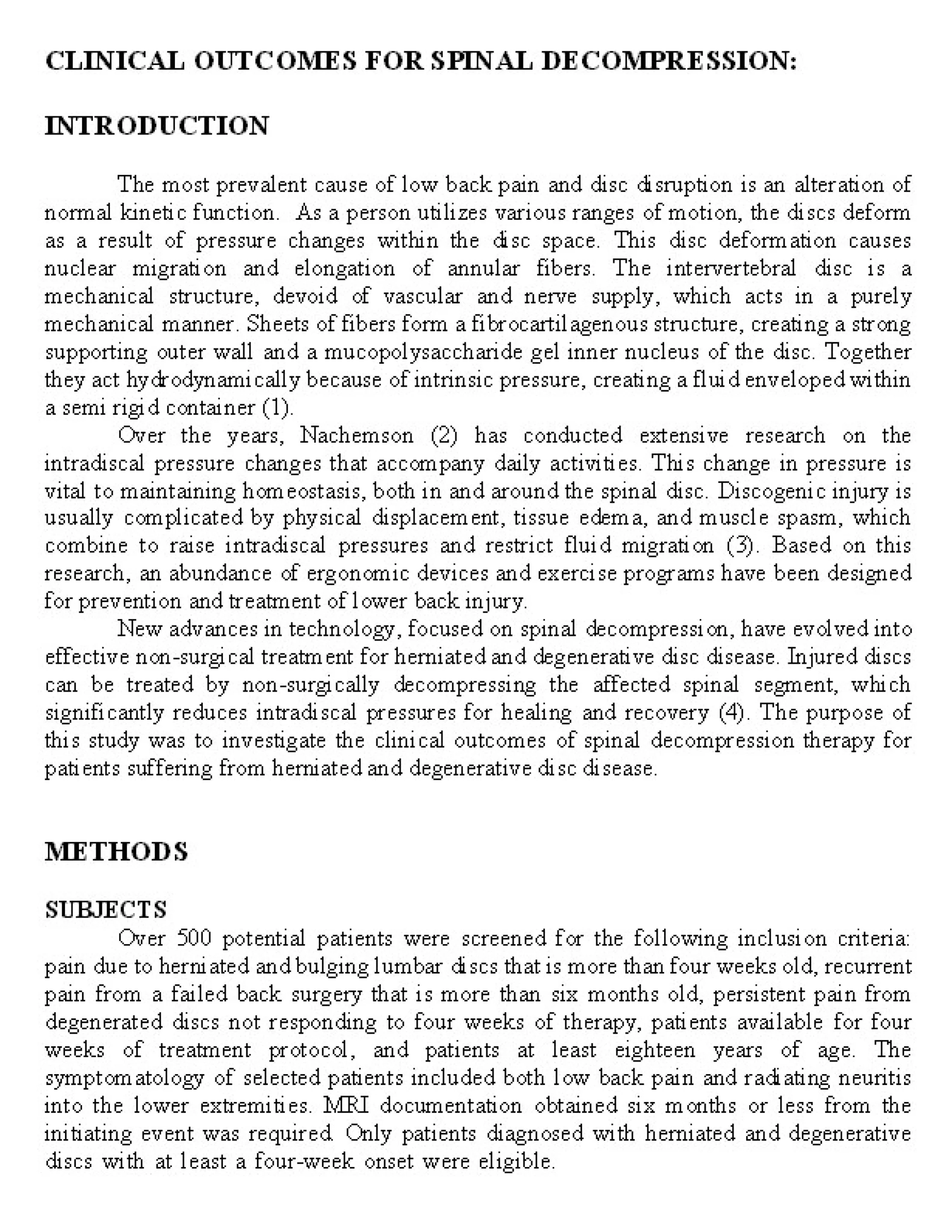
CLINICAL OUTCOMES FOR SPINAL DECOMPRESSION
New advances in technology, focused on spinal decompression, have evolved into effective non-surgical treatment for herniated and degenerative disc disease. Injured discs can be treated by non-surgically decompressing the affected spinal segment, which significantly reduces intradiscal pressures for healing and recovery. The purpose of this study was to investigate the clinical outcomes of spinal decompression therapy for patients suffering from herniated and degenerative disc disease.
Motorized Spinal Decompression for Chronic Discogenic Low Back Pain
Conduct a retrospective chart audit to assess outcomes of a random sample of outpatients treated with motorized spinal decompression via the DRX9000 for chronic low back pain lasting more than 12 weeks. Overall, patients’ pain improved after DRX treatment, requiring fewer analgesics, with better function.
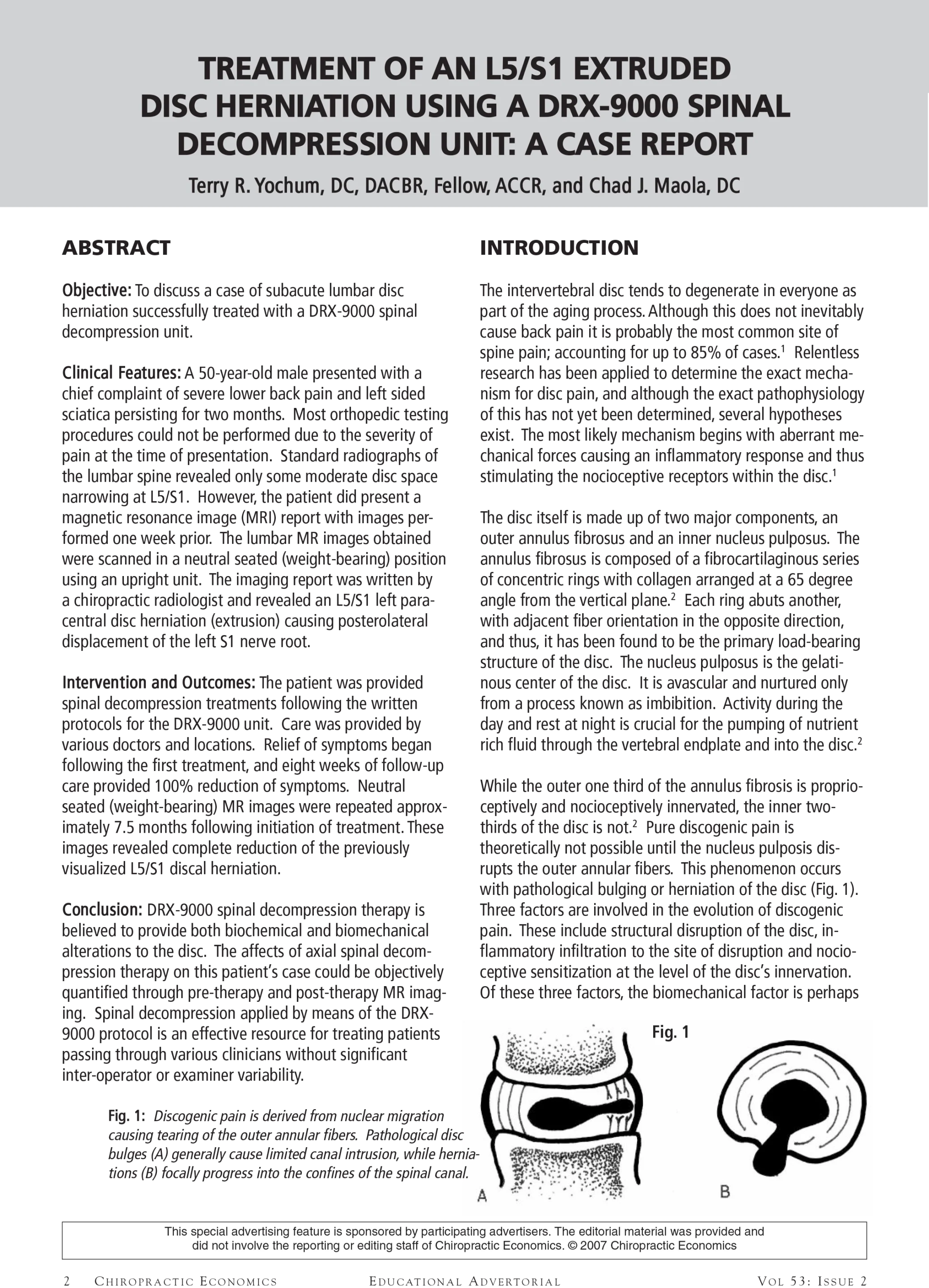
Treatment of an L5/S1 Extruded Disc Herniation using a DRX-9000 Spinal Decompression Unit: A Case Report
Conclusion: DRX-9000 spinal decompression therapy is believed to provide both biochemical and biomechanical alterations to the disc. The effects of axial spinal decompression therapy on this patient’s case could be objectively quantified through pre-therapy and post-therapy MR imaging. Spinal decompression applied by means of the DRX-9000 protocol is an effective resource for treating patients passing through various clinicians without significant inter-operator or examiner variability.

Prospective Evaluation of the Efficacy of Spinal Decompression via the DRX9000 for Chronic Low Back Pain
Twenty patients presenting with low back pain, averaging approximately 5 years in duration, were prospectively enrolled in a 6-week course of 20 motorized spinal decompression treatments via the DRX9000™ (Axiom Worldwide, Tampa, Fla). Two patients withdrew for protocol violations. For the remaining 18 patients, the baseline median verbal pain intensity score on an 11-point scale (0 = no pain; 10 = worst possible pain) decreased from 7 (25th to 75th percentile = 5–7) to 0 (25th to 75th percentile = 0–1) at study conclusion at Week 6 (P < .0001). No device-related adverse events occurred. Overall, 16 of 18 patients reported clinically significant pain improvement after noninvasive spinal decompression.
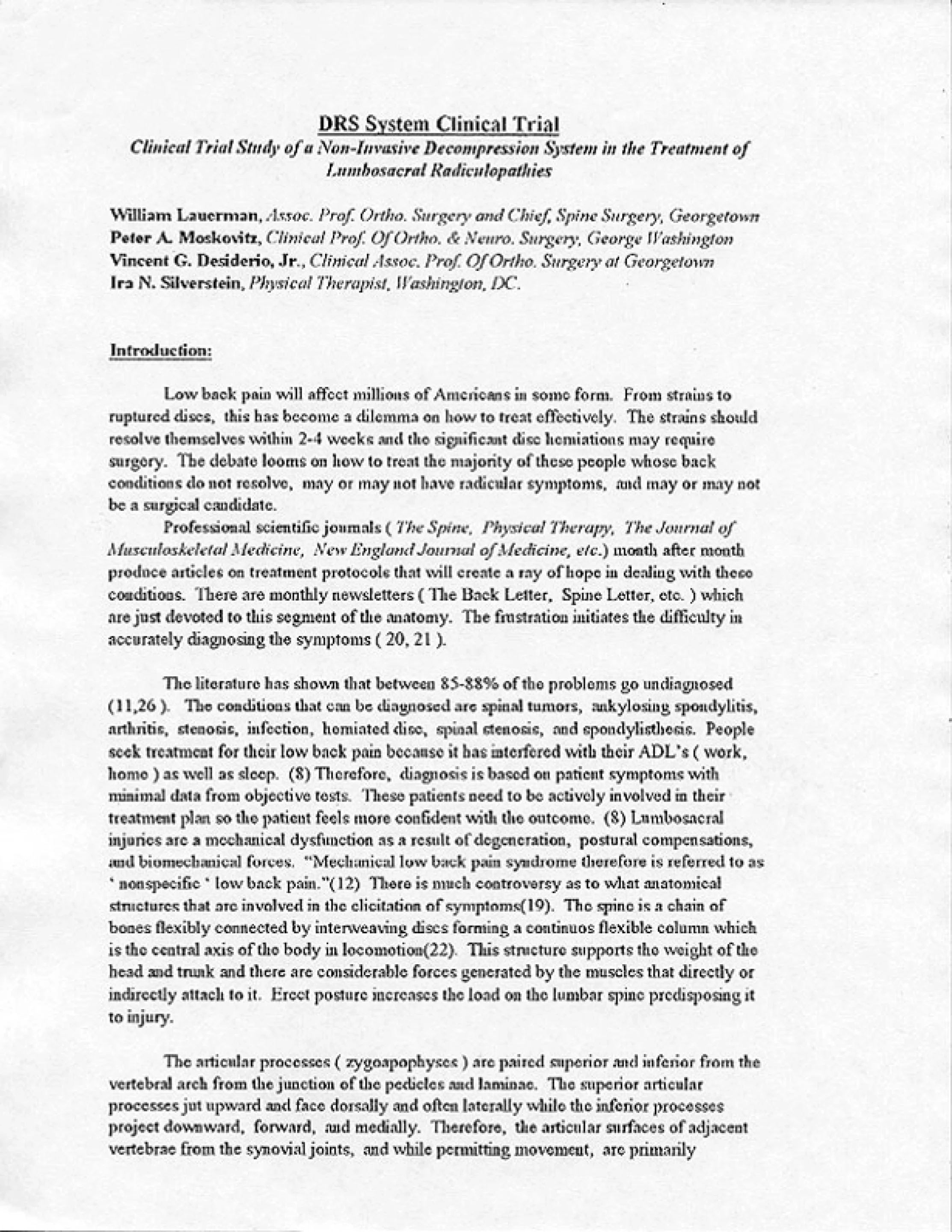
Clinical Trial Study of a Non-Invasive Decompression System in the Treatment of Lumbosacral Radiculopathies
The DRS has documented the creation of significant segmental spinal distraction decompression. This creates a negative pressure gradient which is conducive for promoting discal changes…The DRS is the only system that has been shown to create separation within the lumbar vertebrae. The literature has not shown traction to produce similar results.
Systematic Literature Review of Spinal Decompression Via Motorized Traction for Chronic Discogenic Low Back Pain
The objective of this study was to systematically review the literature to assess the efficacy of nonsurgical spinal decompression achieved with motorized traction for chronic discogenic lumbosacral back pain.
Effectiveness & Safety of Non-Surgical Spinal Decompression
Prospective, multi-center, phase II, non-randomized, clinical study to evaluate the effectiveness and safety of the Axiom Worldwide DRX9000 for active treatment of chronic LBP utilizing a standardized clinical research multimodal protocol.
MRI Evidence of Nonsurgical, Mechanical Reduction, Rehydration, and Repair of the Herniated Lumbar Disc
The present study was undertaken to determine whether clinical betterment can be correlated directly to improvement in MRI image and whether MRI findings shed any light on the mechanism of improvement.
Effects of Spinal Decompressor for Lumbar Disc Herniation
We reported a clinical result of a treatment of lumbar disc Herniation (LDH) patients by using a traction device (DRX9000), which decompresses the intervertebral disc with logarithmic-curve traction. Changes of intervertebral disc on radiogram in healthy persons without hernia at traction by DRX9000 were reported as well. Subjects were seven LDH patients (5 women, 2 men). The mean age was 47 years old (32 – 72)…obvious improvements of symptoms were recognized in VAS values and Japan Orthopedic Association score. The LDH shrinkage was recognized in three patients of four on the MRI image at the time of completion of the treatment.
AAPM Chart Review
Overall, patients’ pain improved after DRX treatment, requiring fewer analgesics, with better function. Practice variability exists in how clinics use the DRX 9000. We didn’t have control groups, making it difficult to know how much of the benefit was placebo or spontaneous recovery and how much was due to the intervention. Randomized double-blinded clinical trials are needed to measure the efficacy of non-surgical spinal decompression systems.
Management of Low-back Pain with a Non-surgical Decompression System – Case Report
Current evidence-based guidelines recommend conservative treatment for at least two months, and often for much longer, before a surgical option is considered. Surgery is associated with risks, and the outcome in many patients with discogenic back pain is unpredictable.
Non-surgical Spinal Decompression for the Treatment of Chronic Low-back Pain — A Case Report
Conclusion: This case report continues to demonstrate effects of the DRX9000 on disc morphology. The 35-year-old woman experienced pain relief and a decrease in herniation size following 20 treatments over an approximately 5.5-week period. These findings are consistent with previous case reports of patients successfully treated with the DRX9000 and with a retrospective CT review study. Results of these case reports and retrospective study suggest that additional prospective clinical trials are needed.
Magnetic Resonance Imaging Findings after Treatment with a Non-surgical Spinal Decompression System — A Case Report
Charlotte Richmond, PhD, is Director of Clinical Research for NEMA Research, Inc., and CEO of the Biomedical Research and Education Foundation. She is Chairperson of the NEMA Research Institutional Review Board (IRB) and a member of the IRB and the Animal Care Research Committees at Mount Sinai Medical Center in Miami Beach.
US Musculoskeletal Review
Current evidence-based guidelines recommend conservative treatment for at least two months, and often for much longer, before a surgical option is considered. Surgery is associated with risks, and the outcome in many patients with discogenic back pain is unpredictable.

Treatment of 94 Outpatients With Chronic Discogenic Low Back Pain: A Retrospective Chart Review
Background: This study’s goal was a retrospective chart audit of 100 outpatients with discogenic low back pain (LBP) lasting more than 12 weeks treated with a 2-month course of motorized spinal decompression.
Whatever Your Condition, We Have Your Back
For over 34 years, we’ve been researching, diagnosing, and treating a wide range of chronic back and neck conditions. And since 2013, we’ve changed thousands of lives with our proprietary High-Performance Healing System™
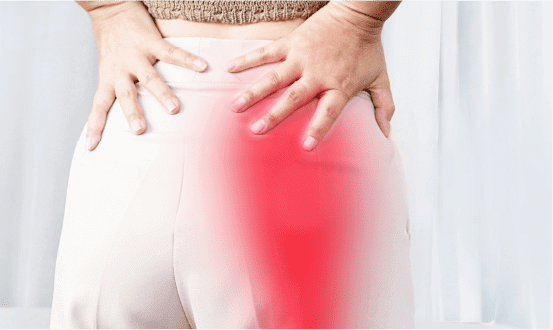


Trusted by Patients with Severe Lower Back, Sciatica and Neck Pain

Halim S.
"They had me back up on my feet and pain free within weeks!"

Jeff C.
"I now feel 100% from my stenosis!!"

David K.
"3 year Disc Herniation now PAIN FREE!!"

Ron P.
"1 year Spinal Stenosis 100% Better in few weeks!"

Daniel H.
I have been suffering from a bulging disc at L5-S1 pressing on my sciatic nerve. I had to be accommodated at work; I couldn’t lift things heavier than 20 Lbs. Gardening became so difficult, I enjoy martial arts and of course I could not do that. Walking my dog

Michael B.
"I'm now able to move and go for walks!"

Eva F.
"Years of Spinal Stenosis - I got my life back again!"

Mitchell K.
"Extruded disc back pain Healed!"

Ivo M.’s Testimonial: Spinal Decompression That Saved My Life
"Spinal Stenosis almost 100 % !"

Theresa H.
"Neck Bulging disc pain relief-UNBELIEVABLE!"
Start Living Pain Free:
Flexible payment options start as low as $146 per month
Most health benefits cover towards the cost of care