

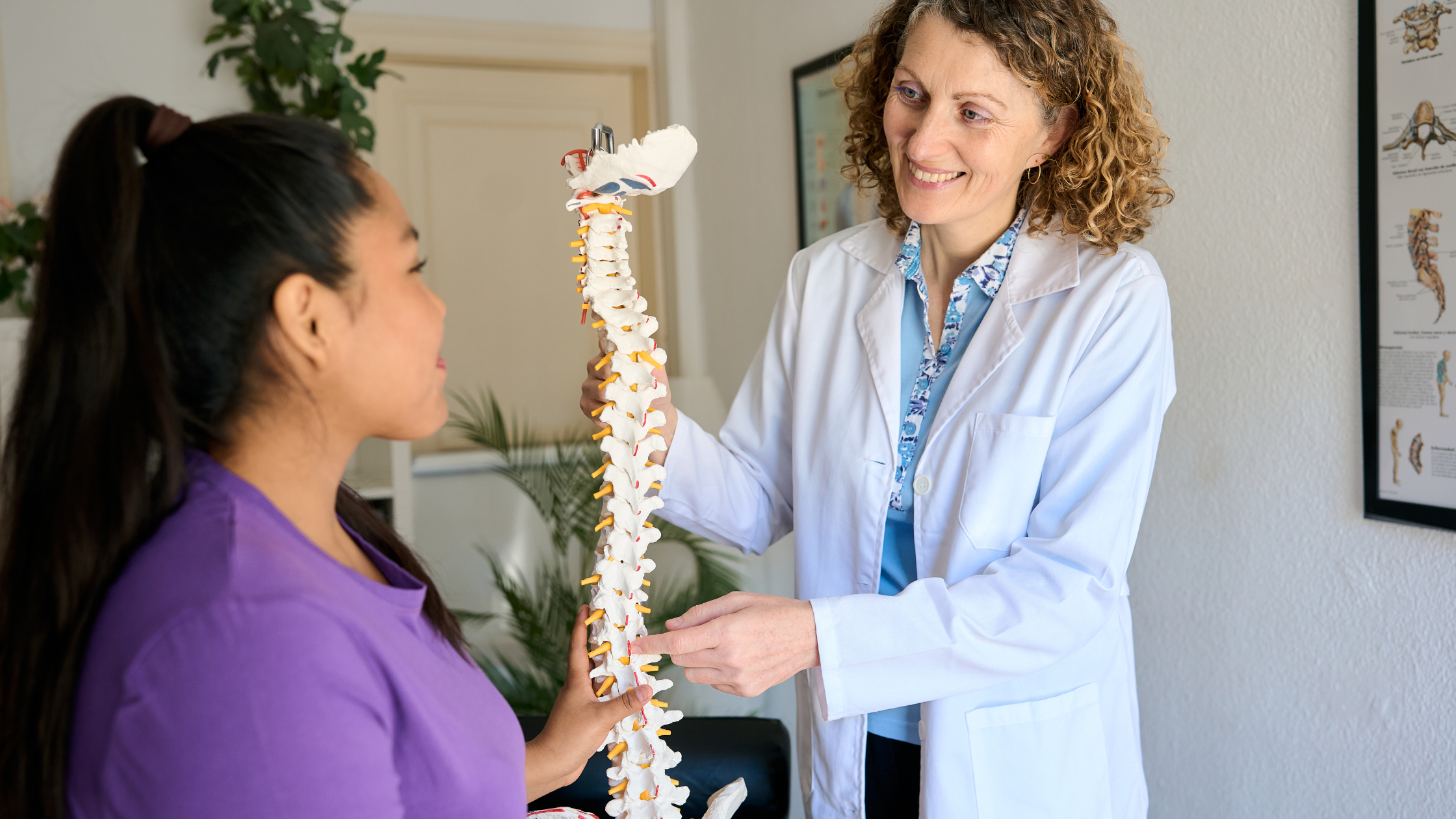
If you have been diagnosed with a disc condition and surgery has been mentioned as a possibility, you are probably trying to figure out whether it is really necessary. That is exactly the right question to be asking. For the majority of Canadian patients with herniated discs, sciatica, degenerative disc disease, and spinal stenosis, non-surgical spinal decompression therapy offers a compelling set of advantages over surgery that are worth understanding fully before you make any decision.
This is not an article that dismisses surgery. There are situations where it is the right call and we will be honest about those. But there are also a very large number of situations where patients are steered toward surgery prematurely, when a well-delivered course of spinal decompression therapy would have achieved the same outcome without the risks, the recovery time, or the surgical complications.
No Surgical Risks
Every surgery carries risk. For spinal procedures, those risks include infection, bleeding, nerve damage, anaesthesia complications, blood clots, and hardware failure in fusion procedures. There is also the very real phenomenon of failed back surgery syndrome, where a patient undergoes technically successful surgery and still ends up in chronic pain. Studies suggest this affects somewhere between 10 and 40 percent of spinal surgery patients depending on the procedure.
Spinal decompression therapy, by contrast, carries virtually no risk when delivered to appropriate candidates by an experienced practitioner. There is no incision, no anaesthesia, no hospital stay, and no possibility of the complications that surgery introduces. For patients with disc conditions who are not yet experiencing progressive neurological deterioration, this risk profile difference is substantial.
No Recovery Downtime
Spinal surgery recovery is not a minor inconvenience. Discectomy recovery typically involves 2 to 6 weeks off work for sedentary jobs, and considerably longer for physical roles. Spinal fusion recovery can take 3 to 6 months before patients return to normal activity, and up to a year before full recovery is achieved.
With spinal decompression therapy, there is no downtime between sessions. Patients drive themselves to the clinic, complete a 25 to 30 minute session, and return directly to work or their regular daily activities. A full program of 20 to 30 sessions is completed over 4 to 6 weeks, during which the patient continues living their normal life. The contrast with surgical recovery is not subtle.
Addresses the Root Cause, Not Just the Symptom
One of the most important benefits of spinal decompression therapy is that it addresses the mechanical cause of disc-related pain directly. By creating negative intradiscal pressure, decompression draws herniated disc material back toward the centre of the disc and away from the nerve it is compressing, while simultaneously encouraging the flow of nutrients and hydration into the disc to support actual tissue healing.
This is not pain management. It is structural correction. The disc that was causing the problem is being treated, not just the nerve signal it was generating. This is why spinal decompression can produce lasting results rather than temporary relief, and why patients who complete a full program at a qualified back clinic often experience sustained improvement long after treatment ends.
Comparable Outcomes for Most Disc Conditions
For patients without progressive neurological deterioration, the clinical evidence comparing surgical and non-surgical outcomes for disc conditions tells a complicated story that many surgeons do not emphasize. Multiple well-designed studies have found that for herniated discs and degenerative disc disease, surgical outcomes at the 1 to 2 year mark are often not significantly better than appropriately delivered conservative care.
Spinal decompression therapy falls into the category of targeted conservative care, and the clinical literature specifically on decompression reports meaningful improvement in 70 to 90 percent of appropriate candidates. For a treatment that carries no surgical risk and no recovery downtime, that outcome profile is remarkable. You can review some of the supporting research on our scientific research page.
Preserves Spinal Mobility
Spinal fusion surgery achieves stability at the cost of motion. When vertebrae are fused together, movement at that segment is permanently eliminated. Beyond the loss of natural mobility, fusion also accelerates degeneration at the adjacent disc levels above and below the fusion, because those segments now bear the mechanical load that the fused segment used to share. This is called adjacent segment disease and it is a significant long-term consequence of fusion surgery.
Spinal decompression therapy preserves the natural structure and mobility of the spine completely. Nothing is removed, fused, or altered. The goal is to restore disc health and relieve nerve compression while keeping the spine intact. For patients who are active, athletic, or simply value being able to move freely as they age, this benefit is significant.
Can Still Work After Surgery Has Failed
For patients who have already had spinal surgery and are still in pain, spinal decompression therapy is sometimes still an option. Failed back surgery syndrome is more common than most people realize, and many of these patients are told their only path forward is another surgery or lifelong pain management.
Depending on the type of surgery and the current state of the spine, decompression therapy can address disc problems at levels that were not operated on, or decompress nerve roots that continue to be compressed despite the previous surgical intervention. Dr. Nusbaum assesses each post-surgical case individually. If you have had back surgery and are still suffering, a free consultation at Back Clinics of Canada in Vaughan is worth pursuing before accepting that surgery has had its final word on your condition.
Integrated Treatment for Lasting Results
At Back Clinics of Canada, spinal decompression is not delivered as a standalone session. It is the foundation of a three-part integrated program that combines decompression with Class IV laser therapy, which reduces inflammation and accelerates cellular healing at the disc level, and a targeted nutritional supplementation protocol that supports disc rehydration and repair from the inside.
This integrated approach, which Dr. Nusbaum developed over 34 years of clinical practice, is designed to produce lasting results rather than temporary relief. You can read more about it on our methodology page.
When Surgery Is the Right Choice
In the interest of honesty, surgery is the right choice when there is progressive neurological deterioration, meaning increasing weakness, loss of reflexes, or loss of bowel and bladder control due to nerve compression. These are genuine emergencies where surgical decompression of the spinal cord or nerve roots is necessary.
Surgery is also worth considering when truly conservative treatment, including a properly delivered course of spinal decompression therapy, has been exhausted without adequate relief. The key word is truly. A patient who has tried physiotherapy and pain medication but has not tried targeted spinal decompression has not exhausted conservative options.
If you have been told surgery is necessary and you have not yet tried spinal decompression therapy with an experienced practitioner, a free consultation at Back Clinics of Canada in Vaughan is worth having before you proceed. Call 416-633-3666 or visit our contact page to book.
Frequently Asked Questions
Is spinal decompression therapy suitable for all disc conditions?
Spinal decompression is appropriate for most disc-related conditions including herniated and bulging discs, sciatica, degenerative disc disease, and spinal stenosis. There are some contraindications, which Dr. Nusbaum assesses at your free consultation. See our conditions page for a full overview.
How do I know if I need surgery or if decompression will work?
The clearest indicator that surgery is necessary is progressive neurological deterioration: worsening weakness, reflex loss, or loss of bladder and bowel function. If you do not have those symptoms, non-surgical decompression is a legitimate and often superior first option. A free consultation with Dr. Nusbaum, including a review of your MRI, will give you a clear picture of which path makes sense for your specific case.
What does spinal decompression therapy cost compared to surgery?
A full decompression program is a fraction of the cost of spinal surgery when you factor in surgeon fees, hospital fees, anaesthesia, and extended recovery time including time off work. See our cost page for a full breakdown of decompression program pricing in Canada.
Can spinal decompression therapy be done alongside other treatments?
Yes. Spinal decompression can complement physiotherapy and other conservative care. Our integrated program at Back Clinics of Canada already combines decompression with laser therapy and nutritional support. Dr. Nusbaum will advise on what combinations make sense for your specific case during your free consultation.