

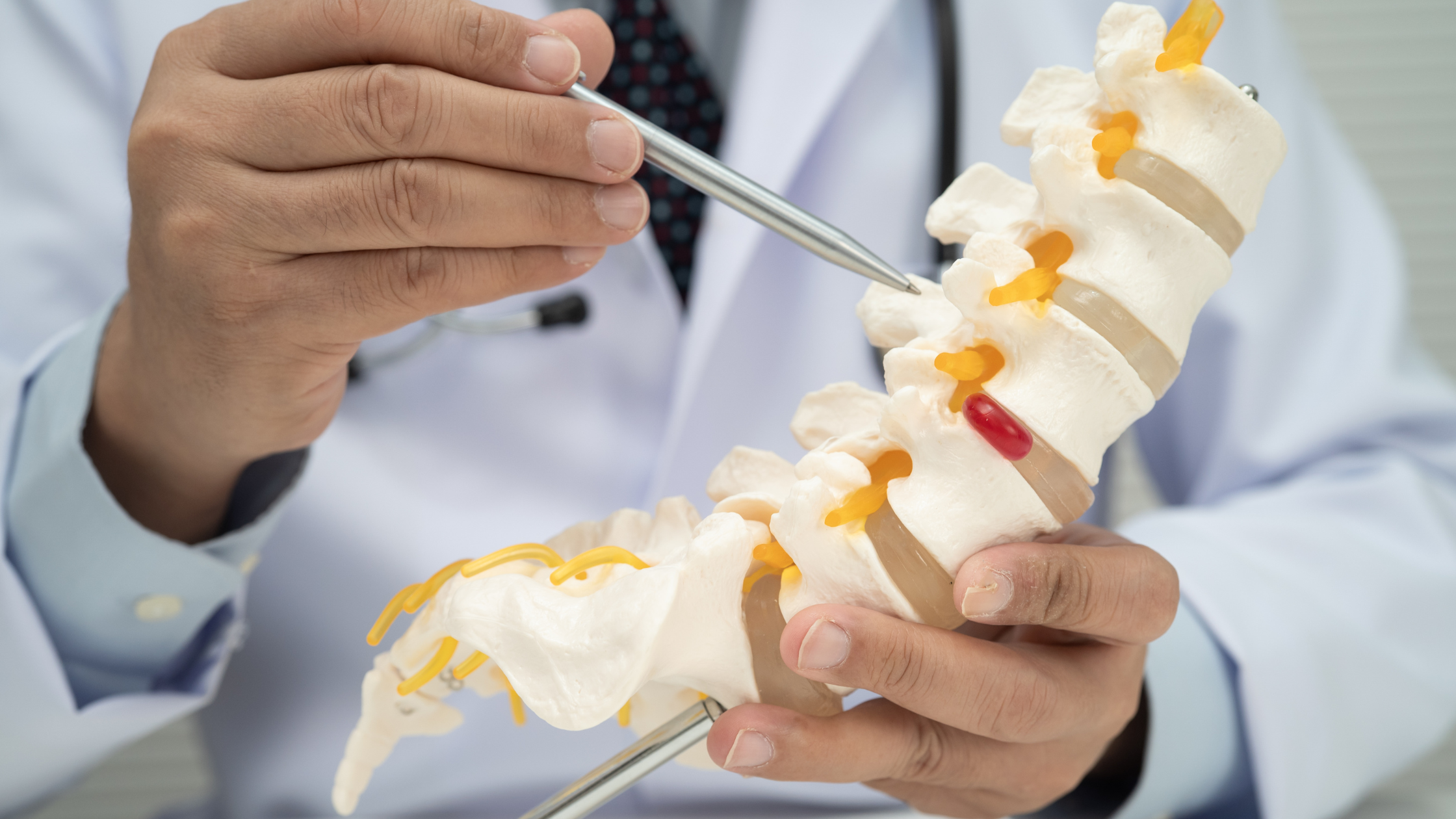
Getting diagnosed with a herniated disc is a stressful experience. Your doctor shows you the MRI, points to the disc that is bulging or ruptured, and explains that the gel inside the disc is pressing against a nerve. Then comes the question that keeps you up at night: do I need surgery?
The answer, for most people, is no. The majority of herniated discs can be treated without surgery, and spinal decompression is one of the most effective non-surgical options available. Here is how it works.
What Is a Herniated Disc?
Between each vertebra in your spine there is a disc, a round cushion made of a tough outer ring called the annulus fibrosus and a soft gel centre called the nucleus pulposus. When the outer ring tears or weakens, the gel can push through and press against the nerve roots that travel through the spine. That pressure is what causes pain, numbness, tingling, and weakness.
Herniated discs most commonly occur in the lumbar spine (lower back) and the cervical spine (neck). They can happen suddenly from a trauma or injury, or gradually from years of repetitive stress and poor disc health.
How Is a Herniated Disc Different from a Bulging Disc?
A bulging disc is an earlier stage of disc damage where the outer ring has weakened and expanded but not yet torn. A herniated disc is more advanced: the outer ring has actually ruptured and the gel has pushed through. Both conditions can cause nerve compression and both respond well to spinal decompression. We explain the difference in detail in our article on bulging disc vs. herniated disc.
Why Surgery Is Not Always the Right First Step
Surgery for a herniated disc, typically a discectomy, involves removing the portion of the disc that is pressing on the nerve. It can be highly effective in serious cases, but it also comes with meaningful risks including infection, nerve damage, failed back surgery syndrome, and accelerated degeneration of adjacent discs.
How Does Spinal Decompression Treat a Herniated Disc?
Spinal decompression therapy creates negative pressure inside the disc by gently and precisely stretching the spine using a computerized machine. That negative pressure has two important effects:
- It can draw the herniated disc material back toward the centre of the disc, reducing or eliminating the pressure on the nerve.
- It pulls oxygen, nutrients, and fluids into the disc, supporting the healing and repair process.
We use the DRX9000 for herniated disc treatment at Back Clinics of Canada. It is a precision decompression machine that targets the specific disc level causing your symptoms.
What About Sciatica from a Herniated Disc?
One of the most common consequences of a lumbar herniated disc is sciatica: the shooting pain, numbness, or tingling that travels from the lower back down through the leg. By treating the herniated disc directly, spinal decompression relieves the nerve compression that is causing the sciatica. Many patients see their leg symptoms resolve alongside their back pain.
What Does Treatment Look Like?
After your free consultation and MRI review, Dr. Nusbaum will design a treatment program specifically for your herniated disc. A typical program involves 20 to 30 sessions over 4 to 6 weeks. Sessions last between 30 and 45 minutes and are comfortable and non-invasive.
Who Is a Good Candidate?
Most people with a herniated disc causing pain, numbness, or radiating symptoms without progressive neurological emergency are potential candidates for spinal decompression. Many of our patients come to us after trying physiotherapy, medications, or injections without lasting relief. You can also read our comparison of spinal decompression vs. surgery if you are weighing your options.
Frequently Asked Questions
Can a herniated disc heal completely without surgery?
Yes, in many cases. The body has a natural capacity to reabsorb herniated disc material over time. Spinal decompression therapy supports this process by creating the conditions for healing and reducing pressure on the affected disc.
How long does it take to recover from a herniated disc with decompression?
Most patients notice meaningful improvement within 2 to 4 weeks of starting treatment. Full healing continues over weeks to months after the formal treatment program is complete.
Can I keep working during herniated disc treatment?
In most cases, yes. Sessions do not require downtime. Depending on the nature of your job, Dr. Nusbaum may recommend some activity modifications, but most patients continue working throughout their treatment program.
What is the success rate of spinal decompression for herniated discs?
Clinical studies report meaningful pain reduction and functional improvement in 70 to 90 percent of appropriate candidates. Book a free consultation to find out whether you are a candidate.